

How to Check for Engine Damage Using a Borescope Camera with Light ?
Engine issues are often hidden deep inside, making them difficult to diagnose without taking everything apart. That’s why more people today rely on a borescope camera with light to look inside an engine quickly and safely.
What Is a Borescope or Inspection Camera?
A borescope is a compact camera tool designed for looking into tight spaces. Depending on the industry or use case, you might also hear it called an endoscope camera, inspection camera with light, camera scope, or snake camera. In automotive work, it’s commonly referred to as an automotive borescope.
Why Use a Borescope Camera with Light?
Opening up an engine takes time, tools, and experience. A borescope camera with light gives you a way to see inside without removing major components. It provides real-time visuals inside the engine, reduces unnecessary disassembly, helps confirm issues before repairs, and many models include flexible probes or articulating heads for better angles.
When Should You Inspect Your Engine?
Using a borescope makes sense when you notice loss of power, knocking or ticking sounds, excessive smoke from the exhaust, or signs of oil or coolant entering the cylinder. Instead of guessing, a quick check with an inspection camera can give you a clear answer.
Step-by-Step: How to Use a Borescope for Engine Inspection
- Let the Engine Cool Down — ensure the engine is completely off and cool before use.
- Remove the Spark Plug — this gives direct access to the cylinder.
- Insert the Borescope — carefully guide the probe into the spark plug hole. If using an articulating tip, adjust the viewing angle as you go.
- Check the Cylinder Walls — look for scratches, scoring, uneven wear, or oil residue.
- Inspect the Piston — watch for carbon buildup, cracks, or burn marks.
- Look at the Valves — with a flexible or articulating head, assess intake and exhaust valve condition.
- Capture Images or Video — record footage for tracking changes over time or sharing with others.
What Problems Can You Detect?
A borescope inspection camera can help identify cylinder wall damage, carbon buildup, valve wear or burning, piston damage, and signs of internal leaks.
Choosing the Right Borescope
When picking a borescope camera with light, look for clear image quality, adjustable lighting, a flexible or articulating probe, and device compatibility. For engine work, an automotive borescope will give you the best results.
Final Thoughts
Whether you call it a borescope, endoscope, or inspection camera, this tool makes it much easier to understand what’s happening inside your engine. Instead of taking things apart and hoping to find the issue, you can take a quick look inside and make a more informed decision.
Ready to see inside your engine?
Shop our automotive borescopes — built for precision engine inspection, from spark plug checks to turbo diagnostics.
Shop automotive borescopes →Looking for the right borescope?
Browse the full Ralcam range — industrial and automotive inspection cameras for every job.
Shop all borescopes →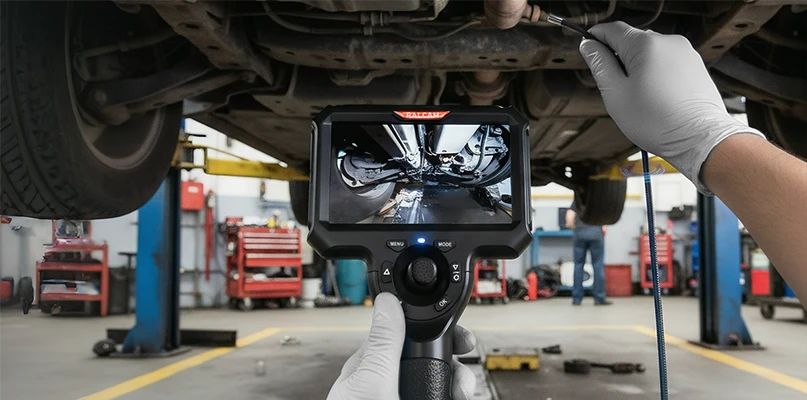
Leave a comment