

Pre-Purchase Vehicle Inspection — The Endoscope's Role in Used Car Due Diligence
Buying a used vehicle is a transaction built on information asymmetry. The seller knows the vehicle's history. The buyer has a test drive, a visual inspection, and whatever a history report reveals. In the gap between what the seller knows and what the buyer can verify lies most of the financial risk in a used vehicle purchase.
What a Test Drive and Visual Inspection Miss
A thorough pre-purchase inspection covers the basics well: fluid condition, tire wear, brake pad thickness, body panel gaps, underbody corrosion, OBD2 fault code scan. What they don't reveal is internal engine condition. A vehicle can pass every external and electronic check while harboring an engine that has experienced severe wear, prior overheating, oil starvation damage, or coolant intrusion.
What the Endoscope Reveals in a Pre-Purchase Context
Cylinder wall condition is the most important single data point an endoscope provides. Scoring, scuffing, or polishing of the cylinder wall surface indicates wear that will reduce compression, increase oil consumption, and shorten the engine's remaining service life.
Piston crown condition reveals thermal history. An engine that has been run lean, suffered coolant intrusion, or experienced detonation shows characteristic damage on the piston crown.
Coolant intrusion evidence is one of the most financially significant findings an endoscope can confirm before purchase. A head gasket failure leaves residue on the cylinder walls, piston crown, and valve faces that persists even after the engine has been partially serviced to suppress the symptoms.
Carbon deposit patterns indicate maintenance history more accurately than service records, which can be falsified or incomplete.
High-Value Vehicle Inspections
The case for endoscope inspection scales with vehicle value. For vehicles in the $20,000–$100,000+ range — late-model luxury cars, performance vehicles, low-mileage trucks — the inspection cost is trivially small relative to the transaction value. Professional inspection services increasingly include endoscope inspection as a standard line item in premium pre-purchase inspection packages.
Turbocharger Inspection
Turbocharged vehicles — now representing the majority of new vehicle production — add a specific inspection opportunity. With the correct probe diameter and sufficient articulation, a technician can view the compressor wheel for tip damage and erosion, the turbine housing for carbon buildup and heat damage, and the shaft for bearing play.
A turbocharger inspection adds perhaps fifteen minutes to a pre-purchase inspection and provides information that distinguishes a well-maintained turbocharged vehicle from one that has been run with poor oil maintenance — a distinction that can easily represent a $2,000–$4,000 difference in repair exposure.
Conclusion
Pre-purchase vehicle inspection is an information problem, and endoscopes provide information that nothing else in the portable inspection toolkit can match. For buyers, the cost of an endoscope inspection is insurance against a repair bill that could dwarf the inspection fee many times over.
Ready to see inside your engine?
Shop our automotive borescopes — built for precision engine inspection, from spark plug checks to turbo diagnostics.
Shop automotive borescopes →Inspecting engines without teardown?
Explore our automotive borescopes — articulating probes built for cylinders, turbos, and hard-to-reach engine components.
Shop automotive borescopes →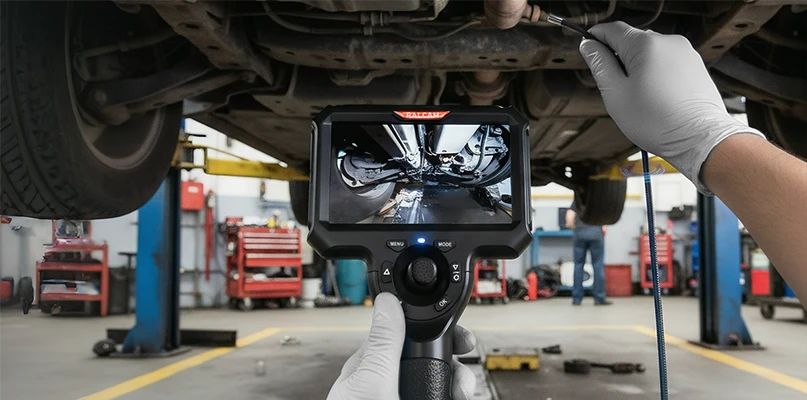
Leave a comment